
Table of Contents
This post contains affiliate links. If you buy through them, we may earn a small commission at no extra cost to you.
Surface Laptop Ultra vs MacBook Pro PROLED: The Future of AI Laptops


Artificial intelligence is moving closer to the user.
For years, most advanced AI workloads depended heavily on cloud infrastructure. That model is changing as manufacturers introduce powerful processors that can run AI models directly on personal devices. Local processing can deliver faster responses, greater privacy, offline functionality, and more control over sensitive information.
This transition has created a new category of high-performance computers: local AI processing laptops.
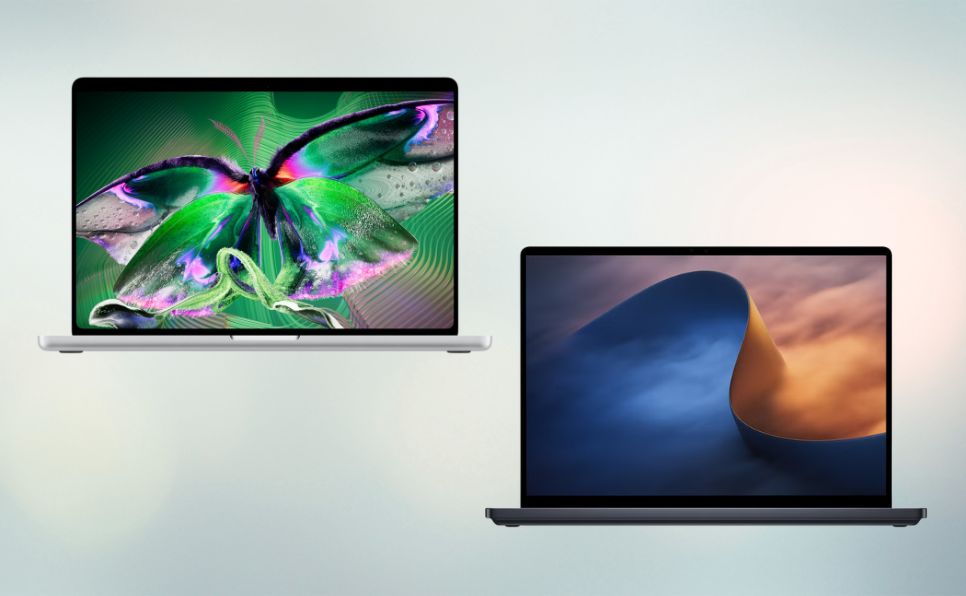
Microsoft and Apple are leading this shift with two ambitious devices. Microsoft’s Surface Laptop Ultra combines Windows 11, Copilot+, unified memory, and NVIDIA RTX Spark Processor. Apple’s MacBook Pro PROLED builds on its tightly integrated hardware-and-software ecosystem while introducing a tandem OLED touch display and powerful M5 Pro and M5 Max configurations.
The Surface Laptop Ultra vs MacBook Pro PROLED comparison is not simply about specifications. It represents two different visions for the future of personal computing.
Microsoft is betting on NVIDIA-powered acceleration, Windows flexibility, and an expanding AI development ecosystem. Apple continues to focus on efficiency, ecosystem integration, creative performance, and purpose-built silicon.
This first-look comparison examines the announced features and specifications of both devices. It does not include independent benchmarks or real-world testing, so final performance conclusions should wait until both laptops undergo detailed evaluation.
Surface Laptop Ultra vs MacBook Pro PROLED: Specifications Overview
The MacBook Pro PROLED offers M5 Pro and M5 Max chip options. Each processor comes in multiple configurations, giving buyers more flexibility in choosing CPU performance, GPU capacity, memory, and overall price.
Apple also provides:
- 14-inch and 16-inch models
- Space Black and Silver finishes
- M5 Pro and M5 Max configurations
- Multiple CPU and GPU core options
- Unified memory for demanding workflows
The Microsoft Surface Laptop Ultra takes a more focused approach. It is available as a 15-inch laptop with two processor configurations and comes in Midnight and Platinum finishes.
Its defining feature is the NVIDIA RTX Spark platform, designed to accelerate local AI workloads through a combination of advanced processing cores and unified memory.
The Surface Laptop Ultra includes:
- A 15-inch form factor
- Two NVIDIA RTX Spark configurations
- Midnight and Platinum finishes
- Unified memory architecture
- Windows 11 and Copilot+ integration
Both systems are designed for users who need more than standard office performance. They target developers, creators, researchers, professionals, and AI enthusiasts who want to process demanding workloads without depending entirely on cloud services.
Why Local AI Processing Matters
AI laptops in 2026 are becoming more than devices with built-in assistants. They are evolving into portable computing platforms that can generate content, analyze data, support development, and process AI models locally.
Running AI tasks on a laptop can offer several important advantages:
- Faster responses for supported workloads
- Improved privacy for sensitive files and prompts
- Reduced dependence on internet connectivity
- Lower reliance on subscription-based cloud processing
- Greater control for developers and technical professionals
- More personalized AI experiences
Microsoft and Apple approach these opportunities differently.
Microsoft’s partnership with NVIDIA could make the Surface Laptop Ultra particularly attractive to users who already work with NVIDIA technologies and CUDA-based applications. Apple, meanwhile, benefits from years of experience integrating its Neural Engine, unified memory, media engines, operating system, and professional applications.
The strongest platform will ultimately depend on software support. Powerful hardware creates possibilities, but developers must optimize their applications before users can experience its full value.
Display Technology
The display is one of the most significant elements in the MacBook Pro PROLED comparison.
Apple introduces a tandem OLED touch display that combines deep contrast, rich colors, smooth motion, and touch functionality. The panel offers up to 1,000 nits of standard brightness and a peak outdoor brightness of 2,000 nits.
The 14-inch MBP PROLED has a resolution of 3024 by 1986 pixels, while the 16-inch version increases it to 3472 by 2266 pixels. Both models support wide color, True Tone, ProMotion, and adaptive refresh rates up to 120Hz.
These features could make the MacBook Pro PROLED especially compelling for:
- Video editors
- Photographers
- Graphic designers
- Digital artists
- Animators
- Content creators
Microsoft equips the Surface Laptop Ultra with a 15-inch PixelSense Ultra Mini LED display. It offers a 3270 by 2180 resolution, 1,000 nits of brightness, a peak brightness of 2,000 nits, and a dynamic refresh rate of up to 120Hz.
Both displays promise a premium visual experience. Apple’s tandem OLED panel may appeal to users who prioritize contrast, color accuracy, and OLED technology. Microsoft’s higher-resolution 15-inch PixelSense display could provide an excellent balance of clarity, brightness, and versatility.
Real-world tests will be necessary to compare color accuracy, reflections, power consumption, touch responsiveness, and sustained brightness.


Ports and Connectivity
Professional users need reliable connectivity, especially when working with external displays, storage devices, cameras, audio equipment, and creative accessories.
The 14-inch and 16-inch MacBook Pro PROLED models include:
- Three Thunderbolt 5 ports
- One HDMI port
- One MagSafe 3 charging port
- One SDXC card slot
- One headphone jack
- Wi-Fi 7
- Bluetooth 6
This selection gives photographers, videographers, and other creators high-speed connectivity without needing adapters for every task. The SDXC card slot remains particularly useful for professionals who regularly transfer media from cameras.
The Surface Laptop Ultra offers:
- Two USB4 ports
- One USB4 port with a magnetic connection
- One HDMI port
- One USB-A 3.1 port
- One headphone jack
- Wi-Fi 7
- Bluetooth 5.4
Microsoft’s inclusion of USB-A could benefit users with legacy peripherals. Apple provides more Thunderbolt connectivity, while the Surface offers a broader mix of modern and traditional ports.
The right option depends on the user’s workflow. Creative professionals may value Apple’s Thunderbolt 5 and SDXC support, while business users may appreciate Microsoft’s USB-A compatibility.
Battery Life, Portability, and Efficiency
Apple has spent years optimizing its hardware and software as a unified system. This approach allows the company to improve performance without increasing energy consumption at the same rate.
Apple claims that the MacBook Pro PROLED can deliver up to 24 hours of battery life under browsing and connected Wi-Fi conditions.
Microsoft claims that the Surface Laptop Ultra can provide:
- Up to 18 hours of video playback
- Up to 12 hours of web browsing over Wi-Fi
These figures come from manufacturer testing and may not reflect demanding real-world AI workloads. Running local language models, rendering video, compiling code, or gaming can significantly reduce battery life on any laptop.
Weight is another important consideration. The 16-inch MacBook Pro PROLED with an M5 Max configuration weighs approximately four pounds, while the Surface Laptop Ultra weighs about 4.41 pounds.
The difference may seem minor, but frequent travelers may notice it when carrying a laptop all day. Apple appears to hold an early advantage in claimed battery life and portability, although independent testing will provide a more reliable comparison.
Software Compatibility and Application Access
Hardware specifications tell only part of the story. Application compatibility will play a decisive role in the Surface Laptop Ultra vs MacBook Pro PROLED competition.
Apple already has a mature ecosystem of software optimized for its silicon. Its native media engines can accelerate video encoding, decoding, and other content-production workloads. Applications developed specifically for Apple silicon can also use the platform’s CPU, GPU, Neural Engine, and unified memory.
This integration gives the MacBook Pro PROLED a strong foundation for:
- Productivity
- Video production
- Music creation
- Software development
- Graphic design
- Local AI generation
The Surface Laptop Ultra runs an ARM-based version of Windows 11. Applications that are not optimized for ARM may operate through Prism, Microsoft’s built-in emulation technology.
Emulation can expand software access, but native applications generally deliver better efficiency and performance. Some specialized programs may also require updated drivers or compatibility layers before they can fully use NVIDIA’s new hardware.
Microsoft has made significant progress in strengthening Windows on ARM. However, buyers should confirm that their essential applications, accessories, plug-ins, and development tools are compatible before upgrading.
Productivity, Creativity, Gaming, and AI
The best laptop aligns with a user’s priorities.
The MacBook Pro PROLED appears well positioned for creators who value battery efficiency, display quality, optimized professional applications, and seamless integration with other Apple devices.
The Surface Laptop Ultra could become a powerful choice for developers, AI professionals, gamers, and Windows users who want access to NVIDIA’s expanding ecosystem.
For productivity, both laptops should offer more than enough performance for office applications, research, communication, multitasking, and collaboration.
For creativity, Apple’s media engines and established professional ecosystem provide a major advantage. The PROLED touch display could also open new possibilities for direct interaction with creative applications.
For gaming, Windows traditionally provides broader access to major PC titles. However, developers will need to optimize games and drivers for the Surface Laptop Ultra’s ARM and NVIDIA architecture.
For AI processing, the final verdict will depend on memory bandwidth, thermal performance, software optimization, model compatibility, token-generation speed, and sustained performance under heavy workloads.
Which Future AI Laptop Should You Choose?
Choose the MacBook Pro PROLED if you prioritize:
- Long battery life
- Professional creative applications
- A tandem OLED touch display
- Apple ecosystem integration
- Thunderbolt 5 and SDXC connectivity
- Multiple screen sizes and chip configurations
Choose the Surface Laptop Ultra if you prioritize:
- Windows 11 and Copilot+ features
- NVIDIA-powered AI acceleration
- CUDA-related development opportunities
- USB-A compatibility
- Windows gaming potential
- A 15-inch high-resolution touch display
Final Thoughts


The Surface Laptop Ultra vs MacBook Pro PROLED competition signals an exciting new phase for personal computing.
Apple enters the race with a mature ecosystem, efficient custom silicon, optimized creative applications, and a compelling OLED touch display. Microsoft responds with NVIDIA RTX Spark technology, unified memory, Copilot+ integration, and a Windows platform built to support a broad range of professional and AI workloads.
Apple appears to offer the more established ecosystem, while Microsoft presents an ambitious platform with significant potential for AI development and Windows-based innovation.
However, announced specifications cannot replace independent testing. Buyers should wait for real-world benchmarks covering battery life, application compatibility, thermal management, AI token generation, gaming, and creative performance.
One conclusion is already clear: the next generation of laptops will not simply run applications. These devices will actively process AI workloads, adapt to user needs, and bring capabilities once reserved for cloud infrastructure directly to the desktop.
The future of AI computing is becoming personal, portable, and increasingly powerful.