
Table of Contents
This post contains affiliate links. If you buy through them, we may earn a small commission at no extra cost to you.
Apple Fall 2026 Releases: What’s New and What’s Next


Apple’s fall 2026 releases have turned the company’s usual upgrade season into a broad refresh across Mac, iPhone, iPad, wearables, and the smart home. Several products are already available, while others are scheduled to reach customers in November and December.
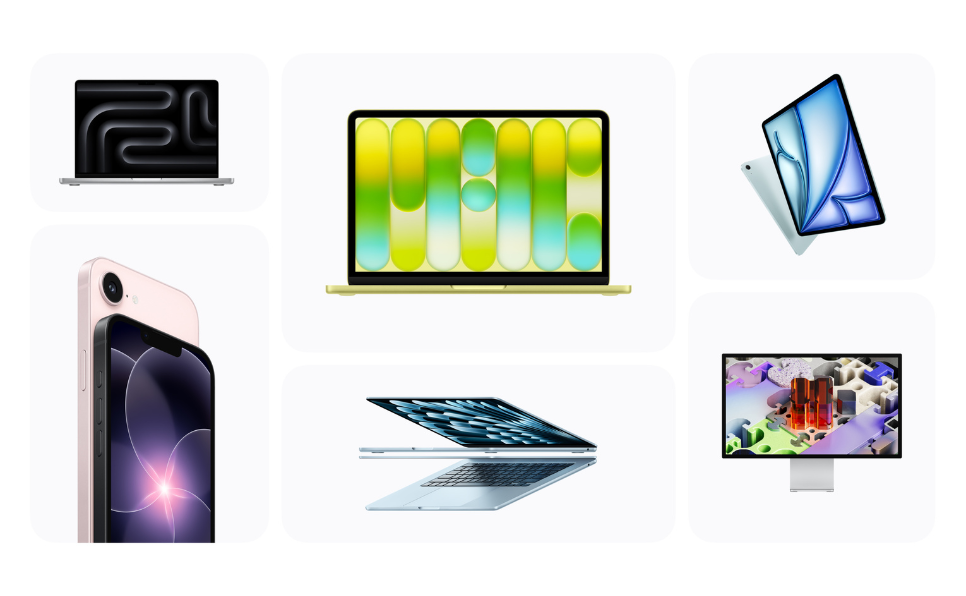
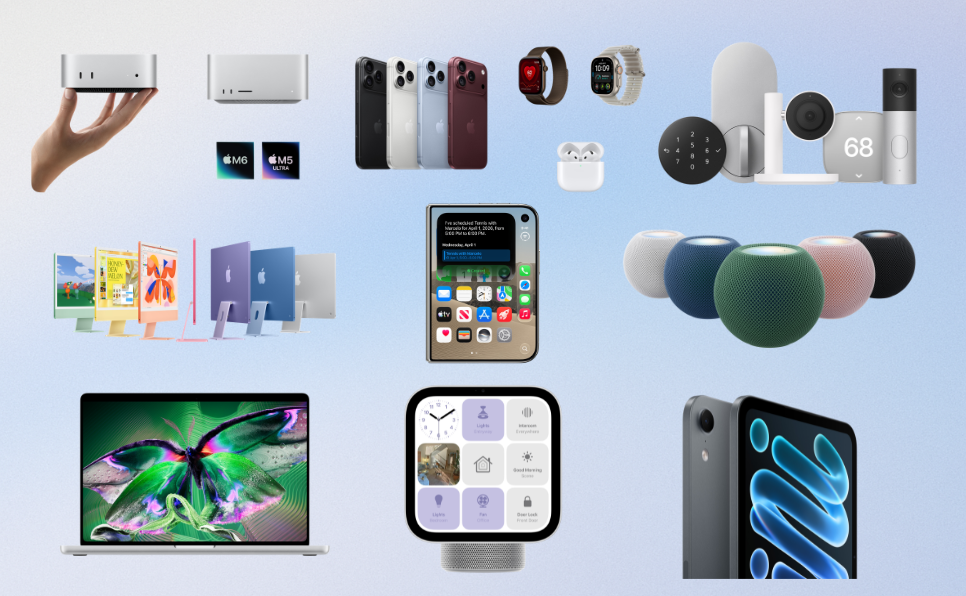
The lineup includes the M6 Mac mini, updated Mac Studio configurations, iPhone 18 Pro, a foldable iPhone, new Apple Watch and AirPods models, an OLED iPad mini, and a MacBook Pro with Apple’s new PROLED XDR display.
But a long product list does not make every upgrade equally worthwhile. The right choice depends on what you use every day, what your current device cannot do, and whether a new feature solves a real problem.
Apple Product Lineup 2026: What Launched
Apple announced its fall products in several waves:
- August 25: Mac mini and Mac Studio.
- September 9: iPhone, Apple Watch, and AirPods.
- October 13: Smart-home and entertainment products.
- October 26: OLED iPad mini.
- October 27: M6 iMac and 14-inch MacBook Pro.
- October 28: MacBook Pro with PROLED XDR display.
Availability varies by product. The M6 Mac mini and Mac Studio began arriving in September, while several October announcements are scheduled for November or December.
Together, the releases point to a broad push toward faster Apple silicon, more capable displays, and a more connected home. Here’s what each update means for buyers.
August 25: Compact Macs, Serious Ambition
Mac mini M6: A Small Desktop With Bigger Goals
Apple introduced the Mac mini with M6 and M5 Pro configurations in August. The M6 model starts at $899 in the U.S., with a base configuration of 16GB of unified memory and 256GB of storage.
The M6 brings updated performance and on-device AI capabilities to Apple’s compact desktop. It also offers a range of ports for connecting displays, storage, and accessories, making it a flexible option for a home office or a smaller studio setup.
For people tracking M6 Mac updates, the appeal is straightforward: a compact desktop designed to handle everyday productivity alongside more demanding creative and AI tasks.
Still, processor branding alone does not determine how well a Mac handles a particular workload. Available memory, software support, and the size of the models you intend to run all matter. Choose a configuration based on the applications you actually use, and leave room for projects to grow.
Mac Studio: A Bigger Canvas for Demanding Work
The updated Mac Studio sits above the Mac mini, with M5 Max and M5 Ultra configurations for more intensive workflows. U.S. starting prices are $2,499 for M5 Max and $5,499 for M5 Ultra.
The M5 Ultra configuration targets users who regularly work with demanding creative applications, large projects, or high-performance computing tasks. Mac Studio also offers extensive connectivity, including Thunderbolt 5, for professional workspaces with multiple displays and fast external storage.
Memory bandwidth and Thunderbolt transfer rates measure different capabilities. Creators should compare both against their own workflows rather than treat either number as a complete measure of performance.
For many buyers, the Mac mini will be the more practical choice. Mac Studio makes sense when your work consistently benefits from more processing power, memory, and expansion.
September 9: A More Versatile Mobile Experience
iPhone 18 Pro and Pro Max: A Focus on Camera Control
Apple announced iPhone 18 Pro and iPhone 18 Pro Max on September 9, with availability beginning September 18. The Pro models feature the A20 Pro chip and updated camera capabilities, including a variable-aperture main camera.
Variable aperture gives photographers greater control over how much light reaches the sensor and how an image is rendered. It is a meaningful development for people who regularly take photos, not just another spec to compare on a chart.
The most useful question for anyone considering an iPhone 18 Pro is whether the updates address a limitation in their current phone. Consider the camera, battery life, performance in the apps you use, and the overall cost of upgrading.
iPhone Duo: Exploring the Foldable Opportunity
Apple announced its book-style foldable, iPhone Duo, on September 9. U.S. availability began October 23. Its inner and outer displays support different situations, from a more compact phone experience to a larger screen for reading and multitasking.
The appeal is flexibility. A larger display could make it more comfortable to read, review documents, or manage several tasks without carrying a separate tablet.
A foldable, however, has to work well beyond the moment it opens. Durability, weight, battery life, and how apps adapt to the changing screen size all influence its value over time.
Apple Watch: Longer Endurance and Deeper Insights
Apple’s September announcements included Apple Watch Series 12 and Apple Watch Ultra 4. Series 12 introduces the S11 chip and a new Health Sensing System. Ultra 4 is designed for users who want a more rugged watch and longer endurance, with Apple claiming up to 50 hours of battery life under specified use conditions.
The best fit depends on how you use a watch:
- Outdoor users may prioritize battery life and durability.
- Fitness enthusiasts may value training and health features that match their routine.
- Everyday wearers may care most about comfort, design, and reliable battery performance.
Before buying for a health feature, check its intended use, regional availability, and limitations in Apple’s current specifications.
AirPods 5: Open-Ear Design With Active Noise Cancellation
Apple announced AirPods 5 on September 9, and they became available on September 18. The open-ear design includes Active Noise Cancellation, plus features like Transparency mode and Adaptive Audio.
For buyers, the decision is not just about the feature list. Fit, comfort, call quality, and listening performance will determine whether the earbuds work well in daily use.
If you are choosing between AirPods models, consider how an open-ear fit feels and whether it suits the places where you listen most.
October 13: A More Connected Apple Home


Apple announced a new smart-home display, updated HomePod mini and Apple TV 4K products, and a collection of connected accessories on October 13. Availability differs: HomePod mini 2 became available October 30, while HomeView and the new Apple TV 4K are scheduled for November 13. The Apple Home Collection is expected to begin arriving in December, with some accessories planned for early 2027.
Apple HomeView
HomeView combines a display, camera, speaker, and smart-home controls in a shared household device. It is designed to bring entertainment, video calls, and home interactions together in one place.
Its usefulness will depend on how naturally it fits into a household’s routines and which services and devices it supports. As with any connected device that includes a camera, review the privacy controls and data-handling details before deciding where to place it.
Apple TV 4K
The new Apple TV 4K adds updated performance and Siri capabilities for entertainment and connected-home tasks. Its U.S. starting price is $299, with availability scheduled for November 13.
The upgrade’s value depends on whether it improves how you watch, search, and control compatible devices. Check service and accessory compatibility before replacing a streaming device that already meets your needs.
HomePod mini 2
HomePod mini 2 became available October 30. It retains the compact design while bringing updated audio and new colors, with assistant features designed to fit into Apple’s connected-home ecosystem.
For existing HomePod mini owners, the question is whether the audio and interaction changes make a noticeable difference in the rooms where you listen or use Siri.
Apple Home Collection
Apple announced the Apple Home Collection with LG Electronics and Schneider Electric. The lineup includes connected-home accessories such as cameras, a video doorbell, a smart lock, and climate-related products.
The products are scheduled to begin arriving in December 2026, with some accessories planned for early 2027. Before investing in smart-home equipment, confirm compatibility, installation needs, update support, and whether core features depend on a subscription or internet connection.
October 26: An OLED iPad mini With Bigger Potential
Apple announced an updated iPad mini with an 8.5-inch OLED display and A20 Pro chip on October 26. Preorders began October 28, and availability is scheduled for November 6. U.S. prices start at $699 for Wi-Fi and $849 for Wi-Fi + Cellular.
The OLED display and updated performance strengthen the iPad mini’s appeal as a compact device for reading, travel, entertainment, and light productivity. Its size remains the defining advantage: it is easier to carry than a larger tablet while offering more screen space than a phone.
Cellular connectivity adds flexibility away from Wi-Fi, but it does not automatically make an iPad a phone replacement. Before choosing a model, consider the communication features you need, supported accessories, storage options, and how you plan to use it throughout the day.
October 27: M6 Mac Updates Reach More Desks and Bags
MacBook Pro: Choose the Configuration, Not Just the Name
Apple introduced an M6 14-inch MacBook Pro on October 27. It is scheduled to become available November 6. Apple also announced a separate MacBook Pro with PROLED XDR display the following day, making the choice of model and configuration especially important.
For the M6 model, compare the memory, storage, and performance options against the applications you rely on. Creative work and local AI tasks can use substantial memory, so the processor name alone is not enough to judge whether a configuration will suit you.
The larger display, added ports, and overall design also matter. If you regularly work with external monitors, large media files, or demanding applications, weigh those needs against the cost and portability of the model you choose.
iMac M6: Familiar Design, Updated Internals
Apple announced a 24-inch iMac with M6 on October 27, with availability scheduled for November 6. It keeps the colorful all-in-one design while updating the internal hardware.
The iMac’s main attraction is a streamlined desktop setup: the display and computer are combined, reducing the number of components on a desk. Buyers should still plan around their display needs, peripheral choices, and the memory their applications require.
For a household or workspace that values simplicity, the iMac may be a better fit than a separate desktop and monitor. For users who need more flexibility in displays or expansion, a Mac mini or Mac Studio may be worth comparing.
October 28: MacBook Pro With PROLED XDR Display
Apple announced the MacBook Pro with PROLED XDR display on October 28. It comes in 14-inch and 16-inch models with M5 Pro or M5 Max, and is scheduled to become available November 6.
The display uses tandem OLED technology and supports a 120Hz variable refresh rate. Apple lists up to 2,000 nits of peak brightness and a 10,000,000:1 contrast ratio. The MacBook Pro also introduces touch interaction on Mac, with gestures such as scrolling, zooming, and dragging.
For creative professionals, the display’s brightness, contrast, and color support may matter most. The touch capability could also make some tasks more direct, but its value will depend on software support and whether it suits your workflow.
Other headline features include a slimmer design, Dynamic Island on Mac, Wi-Fi 7, Bluetooth 6, and up to 24 hours of battery life. U.S. starting prices for M5 Pro configurations are $2,899 for the 14-inch model and $3,399 for the 16-inch model. Preorders opened October 28.
As with any professional laptop, compare the full configuration, not just the display. Processor, memory, storage, ports, and the applications you use will shape the overall value.
Which Upgrade Deserves Your Attention?
The Apple Product lineup for 2026 offers options for different routines and budgets. Start with the problem you want to solve, rather than the release calendar.
- Choose a desktop when sustained performance matters more than portability.
- Prioritize a phone upgrade when camera, battery, or performance limits affect daily use.
- Consider a wearable when its supported features match your goals.
- Build a smart home around compatibility, privacy controls, and dependable operation.
- Keep your current device if it still performs well for the work you need to do.
Final Thoughts: Upgrade With Purpose

The Apple fall 2026 releases bring faster chips, new display technology, a foldable phone, and expanded smart-home options. Some products are already available; others are due in November or December.
Before buying, compare Apple’s official specifications with independent reviews, software compatibility, and the total cost of the configuration you want. A launch date or headline feature is only part of the decision.
The smartest upgrade solves a real problem and earns its place in your everyday routine.