
Table of Contents
This post contains affiliate links. If you buy through them, we may earn a small commission at no extra cost to you.
Future Personal Computing Changes in 2027: Why AI PCs Are Becoming the New Standard
Personal electronics have always evolved alongside human behavior. From the early days of PDAs to smartphones, tablets, laptops, and smart devices, technology has steadily moved closer to our daily lives, shaping how we communicate, shop, bank, work, and stay entertained.
Whether we are applying for jobs, managing finances, checking email, attending virtual meetings, making online purchases, creating content, gaming, coding, or browsing the web, desktops and laptops remain deeply personal tools. They are not just machines sitting on a desk. They are productivity engines, creative studios, business tools, learning platforms, and digital command centers.
For years, many computer upgrades felt predictable. More RAM. More storage. A faster processor. A better display. Longer battery life. These improvements mattered, but they often felt incremental.
In 2027, that pattern is changing. This is where AI PCs and local AI processing become extremely important.
The future of personal computing is no longer only about bigger memory and faster storage. It is about intelligence built directly into the device. AI is ushering in a new era in which desktops and laptops can process complex tasks locally, understand context, improve productivity, and protect user privacy more effectively.


Why Do We Need Next-Generation Computers?
Artificial intelligence has rapidly changed the computing world. It is transforming software, reshaping hardware, and influencing how businesses think about productivity and automation.
Companies are using AI to improve workflows, reduce repetitive tasks, support decision-making, automate customer interactions, generate content, analyze data, and even replace certain workforce functions to some extent. As a result, next-generation computers are no longer a luxury. They are becoming a demand.
Traditional computers were built mainly around familiar workloads:
- Opening applications
- Browsing the internet
- Managing files
- Running office software
- Processing photos and videos
- Playing games
- Handling cloud-based services
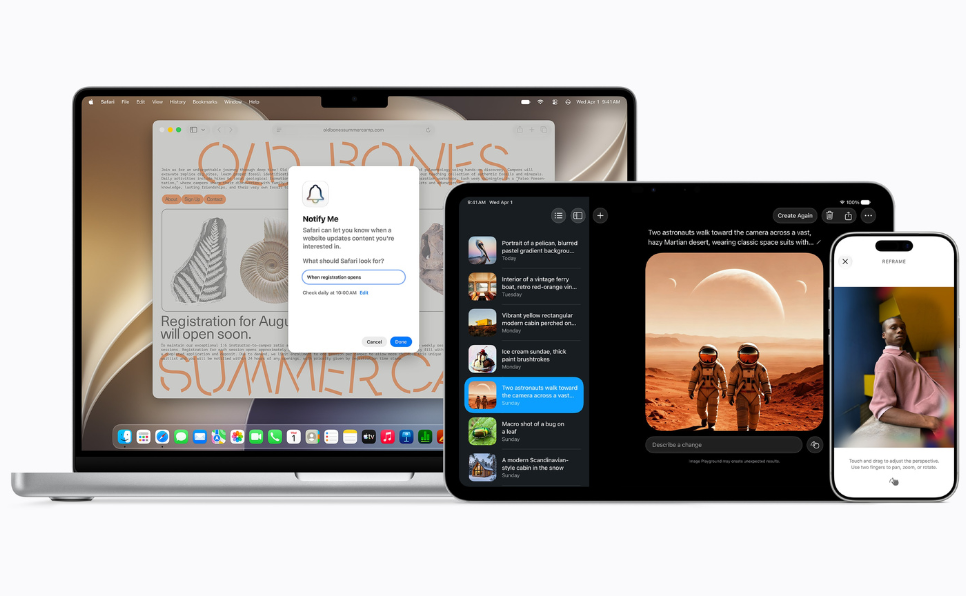
Those needs still exist, but AI introduces a new level of complexity. Modern users now expect their devices to support intelligent features inside everyday applications. Email clients suggest replies. Office tools summarize documents. Browsers assist with research. Banking apps detect fraud patterns. Creative software generates images, edits videos, and improves workflows with AI-based tools.
This shift requires more than a standard CPU upgrade. It requires a computer architecture designed for AI workloads.
That is why the next generation of personal computers is being built around smarter processing, better energy efficiency, stronger privacy controls, and dedicated AI hardware.
How AI Generates Output
To understand why future personal computing changes in 2027 matter, we first need to understand how AI typically works today.
Most AI tools are cloud-based. When users type a request into an AI-powered application, the request is sent to a remote AI service. That request may include the prompt, surrounding context, user preferences, attached files, previous conversation details, or data from the application itself.
The AI service then processes that information using large language models, also known as LLMs. These models are trained to understand language, patterns, context, and relationships between words and concepts. Based on the input, the AI generates an output, such as a summary, answer, recommendation, image, document draft, or automated action.
Popular AI services such as ChatGPT and Gemini have made this process familiar to millions of users. However, cloud-based AI also raises an important question:
Is your information secure when it leaves your device?
The Privacy Question Behind Cloud AI
AI has become more useful because it understands context. But context often includes personal, professional, or sensitive information.
For example, if an AI assistant helps you summarize an email, it may need access to the email content. If it helps analyze a financial document, it may process numbers, names, or confidential details. If it improves your writing, it may evaluate the original text, your tone, and your intended audience.
Many companies state that user information is secure and privacy is protected. However, a core concern remains: when data is sent to the cloud, users have less direct control over where it goes, how it is processed, and how long it may be retained.
This does not mean cloud AI is inherently unsafe. But it does mean the future of personal computing must give users more options.
One of the most promising solutions is local AI processing.
Instead of sending every request to the cloud, the computer can run AI tasks directly on the device. This reduces reliance on external servers, speeds certain tasks, and gives users a more private way to work with AI.
This is one of the main reasons companies such as Intel, Nvidia, AMD, Qualcomm, Microsoft, and Apple are investing heavily in AI-ready personal computers.
What Is an AI PC?
An AI PC is a personal computer designed to process AI tasks locally rather than relying entirely on cloud-based services.
In simple terms, an AI PC has specialized hardware that can handle artificial intelligence workloads more efficiently. It can run AI-powered features directly on the device, including summarization, transcription, image enhancement, voice recognition, predictive assistance, and certain generative AI tasks.
To understand how AI PCs work, it helps to look at three important components:
- CPU
- GPU
- NPU
CPU: The General-Purpose Brain
The CPU, or central processing unit, is a computer’s main processor. It handles general computing tasks and performs millions or billions of calculations to run applications, manage the operating system, process commands, and execute instructions.
For decades, the CPU has been the core of personal computing. It still plays a vital role, but AI workloads can differ greatly from traditional computing tasks. AI often requires processing large amounts of data in parallel, which is not always the most efficient job for the CPU alone.
GPU: The Graphics and Parallel Processing Powerhouse
The GPU, or graphics processing unit, was originally designed to handle graphics-intensive tasks such as gaming, video rendering, animation, and visual effects. Over time, GPUs became essential for AI because they excel at parallel processing.
AI models often require many calculations to happen at the same time. GPUs are well suited for this kind of workload, which is why they are widely used in data centers, AI development, video production, gaming, and machine learning.
For personal computers, GPUs continue to matter. They help with creative work, gaming, visual processing, and AI-enhanced applications. However, GPUs can also consume significant power, especially during heavy workloads.
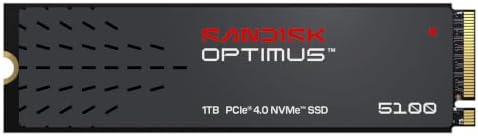
NPU: The AI-Focused Engine Neural Processing Unit
The NPU, or neural processing unit, is one of the most important components in the AI PC era.
An NPU is designed specifically for AI and machine learning tasks. While the CPU handles general computing and the GPU handles graphics and parallel workloads, the NPU focuses on neural processing. This makes it more efficient for tasks such as:
- AI image enhancement
- Background blur in video calls
- Voice recognition
- Real-time translation
- Text summarization
- Predictive assistance
- Local AI model processing
- Context-aware automation
The NPU helps reduce the burden on the CPU and GPU. It also improves performance and battery life by handling AI tasks more efficiently.
This is why modern AI PCs are being built with NPUs integrated into the processor platform. The goal is to make AI features faster, smoother, and more private.
Why AI PCs Matter in 2027
By 2027, AI will no longer feel like a separate tool users open only when needed. It will be built into operating systems, browsers, email platforms, office suites, creative tools, business applications, and personal productivity apps.
This means computers will need to run AI continuously in the background.
AI PCs matter because they can support this new reality. Instead of sending every task to the cloud, they can process many AI requests locally. This can create several key benefits:
- Faster responses for everyday AI features
- Better privacy because less data leaves the device
- Reduced dependence on internet connectivity
- Improved battery efficiency when AI tasks are optimized
- Better performance for creative and productivity workflows
- More personalized experiences directly on the device
In short, AI PCs are not merely a marketing trend. They mark a major shift in how personal computers are designed.
The Rise of Local AI Processing
Local AI processing is one of the most significant shifts in personal computing in 2027.
Today, many AI experiences still rely on cloud services. That model works well for large-scale AI models, but it is not always ideal for privacy, speed, cost, or offline access.
Local AI changes the equation.
When AI runs on your device, your computer can handle certain tasks without constantly sending data to remote servers. This makes personal computing feel more immediate and more secure.
For example, a local AI assistant could summarize documents stored on your laptop, organize files, search your personal content, improve video calls, transcribe meetings, or generate quick writing suggestions without sending every detail to the cloud.
This is especially valuable for professionals who handle confidential information, including business owners, consultants, healthcare workers, financial advisors, writers, developers, students, and executives.
As AI becomes more integral to daily computing, local processing will matter more.
Why Unified Processing Is Becoming Essential
AI workloads can be resource-intensive. They require strong processing power, fast memory access, and efficient communication between hardware components.
In a traditional computer architecture, data often moves among storage, memory, the CPU, and the GPU. Each transfer takes time and consumes energy. As tasks grow more complex, especially AI-related ones, this back-and-forth can reduce efficiency.
Think of it as moving a file between different offices.
One office handles general processing. Another handles graphics. Another manages memory. Another stores the file. Every time work needs to be done, the file travels from one office to another. That creates delays, consumes resources, and adds complexity.
Unified processing aims to reduce that friction.
Apple popularized this approach with unified memory in its Apple silicon chips. Instead of separating resources across multiple areas, unified memory allows the CPU, GPU, and other processing units to access the same memory pool more efficiently.
Using the same analogy, Apple moved the offices into one room and placed everyone around the same table. The result is less travel time, fewer delays, better coordination, lower energy use, and improved performance.
This approach is becoming more important as AI workloads become more common. When computers need to support predictive AI, generative AI, and agentic AI, efficiency matters as much as raw power.
From Predictive AI to Agentic AI
AI has evolved quickly.
At first, many users experienced AI as predictive technology. It suggested words while typing, recommended products, filtered spam, and predicted what users might do next.
Then generative AI became mainstream. It could generate text, images, code, summaries, presentations, and ideas from user prompts.
Now AI is moving toward agentic behavior. Agentic AI can act on the user’s behalf. It can plan steps, complete tasks, coordinate workflows, and behave more like a digital assistant.
For personal computing, this is a major shift.
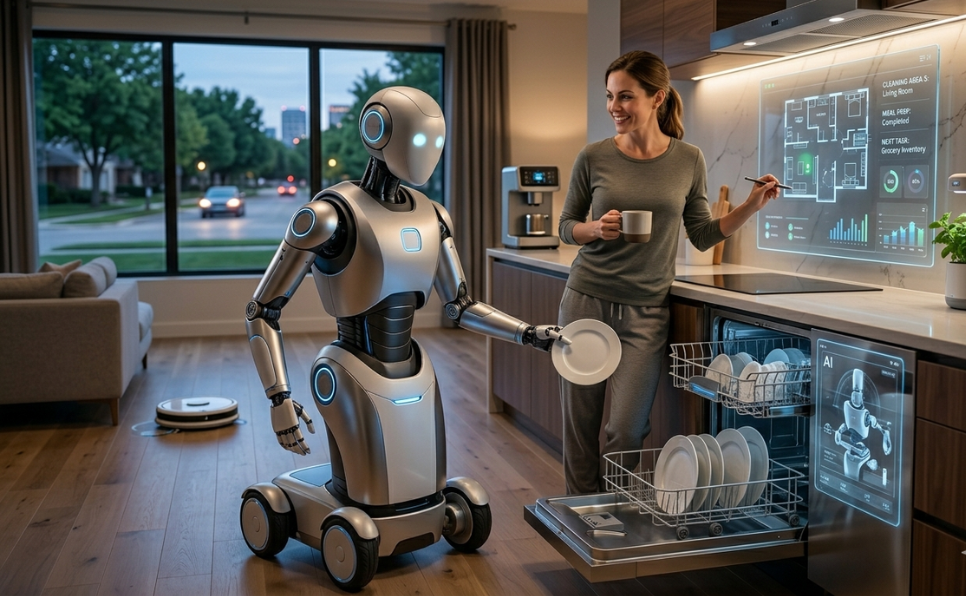
A computer in 2027 may not simply wait for commands. It may understand your work patterns, help prepare documents, manage repetitive tasks, organize your schedule, enhance meetings, summarize research, optimize creative projects, and support decision-making.
When that level of intelligence runs locally, the personal computer becomes more personal than ever.
What This Means for Everyday Users
For everyday users, the message is simple: the next computer upgrade should not be based solely on memory and storage.
RAM and storage still matter, but they are no longer the whole story. If you are planning to buy a new desktop or laptop in 2027, you should look for AI-ready features.
Here are key things to consider:
- Does the computer include an NPU?
- Is it designed for local AI processing?
- Can it run AI-powered productivity tools efficiently?
- Does it offer strong battery life under AI workloads?
- Is the device ready for future operating system AI features?
- Does the architecture support efficient memory sharing?
- Will it remain useful as AI applications advance?
For students, creators, professionals, business owners, and everyday users, an AI-ready computer can provide better long-term value.


Final Thoughts: The Future of Personal Computing Is AI-Ready
Future personal computing changes in 2027 are not just about faster chips, larger storage, or sharper displays. The real transformation is intelligence.
AI is moving from the cloud into the computer itself. NPUs are becoming essential. Local AI processing is improving privacy and performance. Unified memory and efficient architecture are changing how hardware works together. Agentic AI is turning the computer into a more capable personal assistant.
The personal computer is entering a new era.
For years, desktops and laptops were tools we used to complete tasks. In the AI PC era, they will become intelligent partners that help us think, create, organize, automate, and protect our digital lives.
So, if you are planning your next upgrade, do not look only at RAM and storage. Look at whether the device is ready for AI.
Because in 2027 and beyond, the best personal computer will not just be faster. It will be smarter, more private, more efficient, and more deeply connected to the way we live and work.