
Table of Contents
This post contains affiliate links. If you buy through them, we may earn a small commission at no extra cost to you.
The Future of Business Computer Security
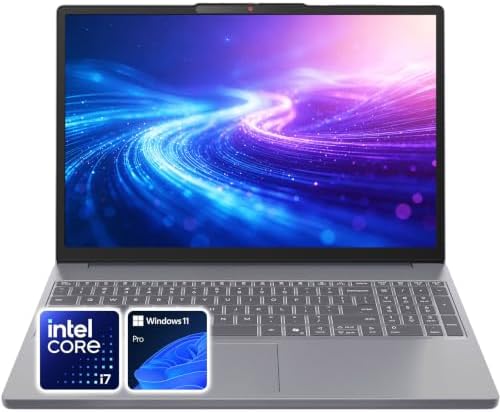

The future of computing is rapidly shifting toward artificial intelligence, cloud infrastructure, and edge computing. At the same time, individuals and organizations are adopting local AI models to automate workflows, analyze information, boost productivity, and speed decision-making.
This transformation creates extraordinary opportunities, but it also introduces a more complex security landscape.
As data moves between personal devices, corporate networks, edge environments, and cloud platforms, traditional security tools can no longer provide sufficient protection on their own.
Antivirus software and reactive threat detection may remain useful, but tomorrow’s challenges demand a smarter and more integrated approach.
The future of business computer security will depend on multiple layers of intelligent protection working together across hardware, operating systems, applications, networks, identities, and data.
Businesses and individuals who understand this shift will be better equipped to protect sensitive data, retain customer trust, and build resilient digital systems.
Current Business Computer Security Features
Before exploring future cybersecurity technologies, it is important to understand the security layers already built into modern personal and business computers.
The strength of these protections varies by hardware, operating system, network environment, applications, and the security policies around each device.
Most computer security strategies currently operate across five core layers:
- Human-level security
- Physical-level security
- Network-level security
- Operating system-level security
- Data-level security
Each layer addresses a different risk area. Together, they create the foundation for a stronger cybersecurity posture.
Human-Level Security
Human-level protection begins with verifying the identity of every person attempting to access a device, application, or company resource.
The most common controls include:
- Unique user IDs
- Strong passwords
- Personal identification numbers
- Authentication applications
- Multi-factor authentication
- Role-based access permissions
Multi-factor authentication adds an important barrier by requiring more than a password. A user may need to enter a temporary code, approve a request through an authentication app, or verify their identity through a trusted device.
However, human behavior remains one of the most significant cybersecurity risks. Weak passwords, reused credentials, phishing attacks, and accidental data exposure can undermine even sophisticated systems.
Future security strategies must therefore combine identity controls with contextual intelligence that can evaluate whether a login attempt appears legitimate.
Physical-Level Security
Physical-level security protects a computer by connecting access to the unique characteristics or presence of an authorized user.
Biometric technologies are already widely used through features such as:
- Facial recognition
- Fingerprint authentication
- Touch-based identity verification
- Hardware security keys
- Trusted device authentication
These technologies create a stronger connection between the user and the device. Unlike a traditional password, biometric information is much harder to guess or reproduce through conventional credential attacks.
The next generation of business computer security will make physical authentication more adaptive. Devices could continuously evaluate contextual signals, including user behavior, device location, access patterns, and environmental conditions, before allowing sensitive actions.
Network-Level Security
Network-level security identifies and blocks threats attempting to enter or leave a connected environment.
Modern network protection commonly relies on:
- Firewalls
- Secure Wi-Fi configurations
- Intrusion detection systems
- Intrusion prevention systems
- Virtual private networks
- Encrypted communications
- Network access controls
Firewalls inspect traffic and block suspicious connections, while virtual private networks encrypt communications beyond the local network. These controls are especially important for remote employees connecting through home, public, or shared networks.
However, cloud computing and distributed workforces have weakened the traditional network perimeter. A company can no longer assume that everything inside its office network is trustworthy.
The future of business computer security will increasingly follow zero-trust principles, requiring continuous verification of every user, device, and connection.
Operating System-Level Security
The operating system is one of the most important defensive layers in any personal or business computer.
Modern operating systems include built-in protections that help prevent unauthorized access, malware execution, harmful applications, and system-level manipulation.
These protections can include:
- Secure boot processes
- Automatic security updates
- Endpoint threat protection
- Application permissions
- Device isolation
- Malware prevention
- System integrity monitoring
Today’s operating systems provide significantly stronger protection than earlier generations, which often depended heavily on third-party security software.
In the future, operating systems will become active participants in AI-powered cybersecurity. Instead of simply identifying known malicious files, they will analyze unusual behavior, detect emerging attack patterns, and respond before a threat spreads.
Data-Level Security
Data-level security protects information whether it is stored locally, transmitted across a network, or processed within an application.
Technologies such as BitLocker and FileVault can encrypt data stored on a device. Even when an unauthorized person gains physical access to the computer, encryption can prevent them from reading the underlying files.
An effective data security strategy should protect information across its entire lifecycle:
- Data at rest on a device or server
- Data moving between systems
- Data being processed by applications
- Data stored in cloud environments
- Data shared with authorized users
This final category, data in use, is becoming increasingly important as businesses deploy AI models that process sensitive internal information.
Advanced Security Features in AI PCs and Business Computers

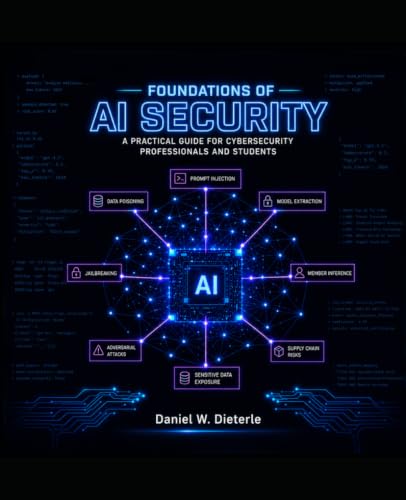
AI-enabled computers are creating a new generation of security systems that can operate closer to the hardware and respond more intelligently to threats.
Instead of relying entirely on cloud-based monitoring, AI PCs can analyze activity directly on the device. This may improve response times, reduce exposure, and help organizations preserve data privacy.
Several technologies are expected to define this transition.
AI-Driven Hardware Defense
AI-driven hardware defense integrates security intelligence into a computer’s foundational layers.
These systems could monitor firmware, BIOS activity, processors, memory, and other hardware components to detect anomalies before they reach the operating system.
Potential capabilities include:
- Monitoring firmware integrity
- Detecting unauthorized BIOS changes
- Identifying abnormal processor activity
- Protecting sensitive system memory
- Analyzing behavioral patterns
- Isolating compromised components
The strategic advantage is clear: threats can be identified at the core hardware level, not after they affect applications or data.
This creates a more proactive defense model. Security becomes part of the device’s architecture instead of a separate software layer added after deployment.
Smarter Identity and Access Management
The IAM (Identity and Access Management) framework provides a way to authenticate users, authorize access, and manage permissions across an organization.
IAM systems often integrate capabilities such as:
- Single sign-on
- Role-based access control
- Privileged access management
- User lifecycle management
- Authentication monitoring
- Permission auditing
The future of IAM will move beyond static usernames, passwords, and access lists.
AI-powered systems could evaluate whether a request matches a user’s normal behavior. A login from an unfamiliar device, an unusual location, or an unexpected time could trigger additional verification or temporary restrictions.
This adaptive model makes identity protection more responsive while reducing the risk created by stolen credentials.
Next-Generation and Post-Quantum Cryptography
Quantum computing could eventually challenge some of the encryption methods used to protect modern communications and data.
Post-quantum cryptography is being developed to address that possibility. It relies on advanced mathematical approaches designed to resist attacks from both conventional and quantum computers.
For organizations, the transition will not happen overnight. Businesses must identify where cryptography is currently used across devices, applications, databases, and communication systems.
Preparation may include:
- Auditing existing encryption standards
- Identifying sensitive long-term data
- Planning for cryptographic agility
- Updating legacy infrastructure
- Evaluating post-quantum security options
Forward-thinking organizations should begin preparing before quantum threats become an urgent operational reality.
Futuristic Security Features in Personal and Business Computers
The list of emerging business computer security extends far beyond AI-enhanced antivirus software.
AI is being integrated across hardware, operating systems, applications, network infrastructure, and user access controls. This will create more autonomous, predictive, and personalized security environments.
Three developments deserve particular attention.
Agentic Defense Architecture
Agentic defense architecture marks a major shift from security systems that merely send alerts to systems that can take controlled action.
An agentic security platform could independently:
- Detect suspicious activity
- Investigate related events
- Restrict compromised accounts
- Isolate affected devices
- Block malicious connections
- Escalate high-risk incidents
- Document the response
This approach could dramatically reduce the time between detecting and containing a threat.
However, autonomous defense must include strong governance. Security agents should operate within carefully defined permissions, maintain transparent logs, and allow human oversight for critical decisions.
The goal is not to remove people from cybersecurity. It helps security teams respond faster and focus on higher-value strategic work.
Confidential Computing and Hardware-Based Data Privacy
Confidential computing protects all data while it is being processed by isolating it within a trusted execution environment.
These protected environments, often called secure enclaves, can reduce exposure by preventing other software components from freely accessing sensitive workloads.
This technology could become especially important for:
- AI model processing
- Financial information
- Healthcare data
- Intellectual property
- Customer records
- Confidential business analytics
Hardware-based privacy helps organizations use advanced computing capabilities without exposing raw information across the broader system.
As AI workloads move between local devices, edge platforms, and cloud infrastructure, confidential computing could become a central pillar of future cybersecurity technologies.
Decentralized Secure Access Service Edge
Secure Access Service Edge, commonly known as SASE, combines networking and security capabilities within a unified, cloud-delivered framework.
A decentralized SASE model could push policy enforcement closer to users, devices, edge servers, and cloud workloads.
Instead of waiting for traffic to reach a central security checkpoint, organizations could evaluate connections at the first meaningful point of access.
Potential benefits include:
- Faster threat detection
- Consistent security policies
- Improved support for remote work
- Reduced dependence on a central network perimeter
- Better protection across cloud and edge environments
- More scalable access control
This architecture reflects an important reality: modern businesses no longer operate from one building, one network, or one data center.
Security must follow the user and the workload wherever they move.
How Businesses Can Prepare for the Future
Organizations do not need to adopt every emerging technology immediately. They do, however, need a clear strategy to evaluate risk and modernize their defenses.
Business leaders should prioritize the following actions:
- Audit current hardware, software, identity, network, and data controls.
- Replace unsupported devices and outdated operating systems.
- Implement multi-factor authentication across critical accounts.
- Apply least-privilege access to users, applications, and services.
- Classify sensitive data and strengthen encryption practices.
- Evaluate AI-powered security tools based on measurable risks.
- Develop an incident response plan for autonomous security environments.
- Prepare for post-quantum cryptographic migration.
- Educate employees to identify phishing and social engineering threats.
- Review security policies as cloud and edge adoption expands.
The strongest cybersecurity strategy will combine advanced technology with responsible leadership, clear governance, and continuous employee awareness.


Final Thoughts
The future of business computer security will be intelligent, adaptive, hardware-aware, and increasingly autonomous.
Traditional antivirus software will remain one part of the cybersecurity ecosystem, but it will no longer be the center of protection. Businesses will need security systems that defend devices, identities, networks, applications, and data as one connected environment.
AI-driven hardware defense, adaptive IAM, post-quantum cryptography, agentic security, confidential computing, and decentralized SASE are not isolated trends. Together, they represent the next evolution of digital protection.
For business leaders, the message is straightforward: cybersecurity can no longer be treated as an afterthought or a technical issue reserved for IT departments.
It is a business resilience priority.
Organizations that prepare early will be better equipped to protect their information, support innovation, and earn trust in an increasingly intelligent and interconnected world.