

Table of Contents
This post contains affiliate links. If you buy through them, we may earn a small commission at no extra cost to you.
Wearable Tech: Smart Rings, Glasses, and Clothing Explained
Wearable tech is no longer just about a watch on your wrist. It’s anything that lives on your body, moves with you, and quietly feeds you (and your apps) useful data. From smartwatches, glasses, and rings to medical sensors we barely notice—these are the “wearables” shaping how we live, work, and stay healthy.
In this post, we’ll look at the next wave of wearables and how they’re changing daily life. Which technologies are evolving the fastest? How will they impact our health, privacy, and the way we connect with the world? Let’s break it down.
We’ll explore the wearable tech we already know—like rings, glasses, bands, and smart clothing—and peek into how they might look and perform in the future. Many of these devices already combine AI, augmented reality, and predictive analytics. They don’t just track; they interpret and guide. They can help predict health issues, nudge us toward better habits, and even support our decision-making.
Of course, it’s not all upside-down. More data means more questions about privacy—ours, the people around us, and the companies collecting it. So, as we look at what’s available today and what’s coming next, we’ll also consider how to protect ourselves and use this tech wisely.
Let’s dive in.


Smart Rings
Think of smart rings as the minimalist version of smartwatches: small, fashionable, and unexpectedly capable. They are lightweight, comfortable to wear around the clock, and primarily focused on health monitoring.
Smart rings can track sleep patterns, heart rate, and other vital signs. Connected to your smartphone via Bluetooth or Wi‑Fi, they silently send your data to an app that visualizes and analyzes it for you.
Unlike smartwatches, which can feel bulky or run low on battery when worn all night, rings are more discreet and often more comfortable for continuous wear. If you care about tracking specific metrics—such as sleep quality, nervous system activity, or key health markers—smart rings can be an incredibly useful, always‑on companion.
Some popular smart rings on the market right now:
• Oura Ring 4
• Galaxy Ring
• RingConn Gen 2
Smart Glasses
Smart glasses have evolved significantly from their early prototypes. Today, they’re packing features like heads‑up displays that let you reply to messages, follow turn‑by‑turn navigation, and see useful info overlaid on the world in front of you.
One of the coolest features: perspective sharing. During a video call, the other person can see what you’re seeing, almost as if they’re standing beside you—even if they’re on the other side of the world.
Modern smart glasses can also translate text and images in real time, making foreign labels, menus, or signs instantly understandable. They can show information about your surroundings and help you say, “Here’s where I am,” and actually share that exact view.
All of this adds up to more accessibility and convenience, whether you’re traveling, working, or just exploring. The flip side? Ongoing privacy concerns—especially when it comes to recording and sharing what you see. Still, for many users, smart glasses are quickly becoming one of the most exciting wearables out there.
Some of the most popular smart glasses available today:
• Ray‑Ban Meta Gen 2
• XReal One Pro
• RayNeo Air 4 Pro
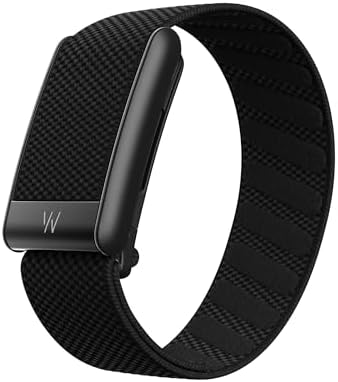
Smart Bands
Smart bands are the stripped‑down, sport‑ready version of smartwatches. They’re slim, lightweight, and usually more affordable, but still packed with the essentials.
These bands track your day-to-day movement—walking, running, cycling, and other workouts—while keeping tabs on steps, heart rate, and overall activity. Many models also offer sleep tracking, so you can see how well you’re actually resting.
When paired with your phone, smart bands can show text messages, call alerts, and notifications, and even warn you if you’ve walked away from your phone. Because they typically have excellent battery life and a lower price tag than full-featured smartwatches, they’re a great entry point into the wearable world.
Popular smart bands on the market:
• Polar Loop
• Fitbit Charge 6
• Garmin Vivosmart 5


Smart Pendants and Pins
Smart pendants and pins are small, AI-powered wearables that focus on capturing and understanding information around you.
They can:
• Listen to conversations (like in a meeting or a classroom)
• Transcribe what’s being said
• Identify who said what
• Translate speech into multiple languages
Once paired with a phone or computer, these devices act as a kind of digital scribe—handy for note‑taking, collaboration, or reviewing discussions later. They’re compact and discreet, which makes them convenient, but that also raises serious privacy concerns when people don’t realize they’re being recorded.
Some notable smart pendants and pins:
• Palud NotePin
• Omi
Smart Clothing
Yes, your clothes are getting smarter too.
Smart clothing is still emerging, but the early versions already look promising—especially for athletes and fitness enthusiasts. These garments can monitor muscle activity, track speed and movement, and provide detailed performance data.
For example, smart socks (sometimes called sensory smart socks) can track your running mechanics—things like landing, takeoff, and pace. Paired with an app, they can give you feedback, almost like having a personal coach saying, “Adjust your stride,” or “Pick up your pace.”
There are also jackets, like certain Levi’s Trucker jackets, that integrate with Google’s AI technology. These allow you to connect your jacket to your phone, making it easy to control music, view navigation directions, answer calls, and more—all just by touching the fabric instead of fishing for your phone.
Some leading names in smart clothing include:
• Hexoskin
• Sensoria
• Levi’s
Skin patches
Another exciting development in wearables: ultra-thin, AI-powered skin patches.
These patches are designed to sit almost invisibly on your skin and continuously monitor health metrics, including blood pressure, blood oxygen levels, and other vital signs. They communicate wirelessly with apps or nearby devices and are being developed to require little to no charging.
The goal? Continuous, effortless health monitoring that blends into your daily life.

Conclusion
The wearable tech space is evolving faster than ever. Devices are shrinking, getting smarter, and integrating more seamlessly with what we already wear every day—from rings and glasses to jackets and socks.
Used well, these technologies can make life easier, healthier, and more efficient. They help us understand our bodies, stay connected, and make smarter choices in real time.
But alongside the convenience and cool factor, we need to stay conscious of privacy, security, and how much data we’re willing to share.
Wearables aren’t just gadgets anymore—they’re becoming part of our lifestyle. And this is only the beginning.