
Table of Contents
This post contains affiliate links. If you buy through them, we may earn a small commission at no extra cost to you.
iPhone Duo: The Foldable iPhone That Redefines the Category
The Foldable iPhone Built to Challenge the Status Quo
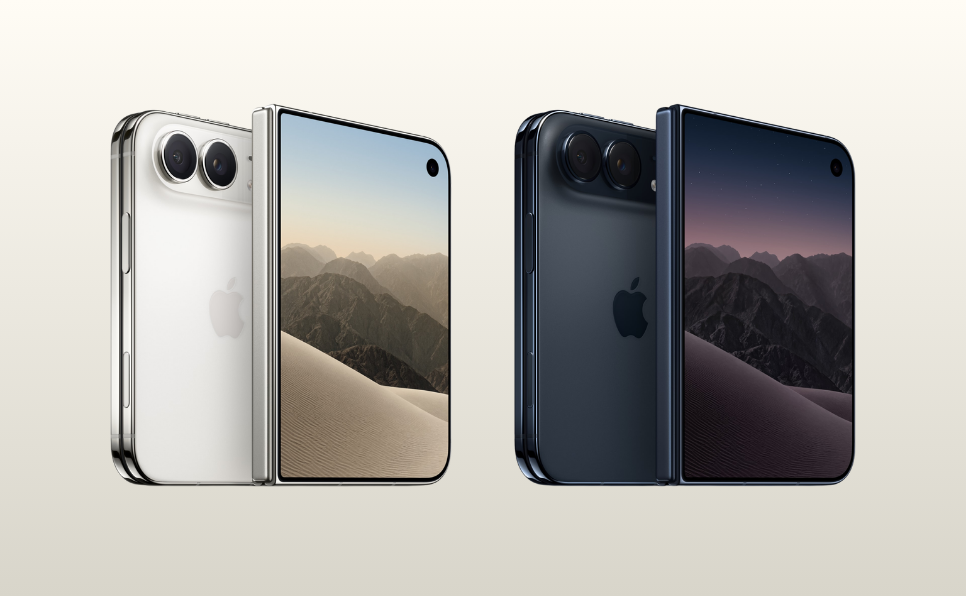
Apple introduced the iPhone Duo, its new foldable iPhone, in September 2026, and it’s scheduled to become available on October 23. At first glance, it may look like another premium device entering an increasingly crowded category. Look closer, however, and its significance becomes clear.
Apple has not merely created a phone that folds. It has developed a device that answers the question the foldable smartphone industry has struggled with for years: Why should consumers choose a foldable phone in the first place?
That distinction matters.
For nearly a decade, manufacturers have experimented with flexible displays, multiple hinges, clamshell designs, book-style devices, and even tri-fold concepts. The technology has improved, but the central value proposition has often remained unclear.
The iPhone Duo approaches the market differently. Instead of making the folding screen the headline feature, Apple has tied the form factor to a broader hardware, software, and ecosystem strategy.
To understand why this approach could reshape the market, we first need to examine how foldable phones got here.
A Brief History of Foldable Smartphones
The modern foldable smartphone era began in 2018 with the Royole FlexPai. Although ambitious, the device exposed many of the problems that would define the early category. Its software felt unfinished, its durability raised concerns, and the overall experience lacked the polish required for widespread adoption.
Huawei and Samsung followed with the Mate X and Galaxy Fold in 2019. Motorola later revived its iconic Razr design as a foldable clamshell phone. Other major manufacturers soon entered the race, including Google, Xiaomi, OnePlus, Honor, Oppo, and Vivo.
Today, the foldable market includes three primary formats:
- Flip phones: Compact clamshell devices designed to reduce pocket space.
- Book-style foldables: Smartphone-sized devices that open into small tablets.
- Tri-fold devices: Larger screens built around multiple folding sections.
Every generation has delivered noticeable improvements. Displays have become brighter, hinges stronger, and software more responsive. Cameras, processors, and batteries have also improved.
However, progress has not eliminated the category’s most important challenges.
Consumers still question:
- Whether folding screens are durable enough for daily use
- How visible or distracting the display crease will be
- Whether applications can adapt properly to multiple screen sizes
- Whether the added weight and thickness are justified
- Whether a foldable smartphone delivers enough value for its premium price
- Whether the larger screen creates a genuinely better experience
These are not minor technical concerns. They define whether a foldable device becomes an essential tool or remains an expensive novelty.
Why Apple Waited to Enter the Foldable Market
Apple watched competitors release foldable phones year after year. Samsung, in particular, continued refining its devices with improved displays, stronger hinges, slimmer designs, and new software features.
Apple could have entered the category earlier. Instead, it chose to observe how the market developed.
This gave the company an important strategic advantage. Apple did not need to repeat every mistake made during the industry’s early experimentation. It could study consumer behavior, identify recurring complaints, and determine which technological improvements were necessary before launching an Apple foldable phone.
The company’s strategy appears to have followed three principles:
- Learn from the market before entering it
- Develop the supporting technology across existing products
- Wait until the form factor can deliver a meaningful use case
Apple’s earlier work on thinner devices also contributed to this direction. The iPhone Air demonstrated how the company could reduce a phone’s profile while maintaining structural strength and premium performance.
Rather than an isolated experiment, that thinner design is an important step toward the iPhone Duo. A successful foldable needs lightweight components, efficient processors, strong materials, compact internal engineering, and dependable battery performance.
Apple spent years developing these capabilities before bringing them together in one device.
A Compelling Use Case for the iPhone Duo
The greatest strength of the iPhone Duo is not simply that it folds. Its advantage lies in what the folding design enables.
Consumers increasingly want larger screens for productivity, entertainment, gaming, communication, and content creation. At the same time, they do not want to carry a tablet everywhere.
The iPhone Duo attempts to bridge those needs.
When closed, it functions as an iPhone you can use comfortably with one hand. When opened, it offers a larger workspace inspired by the iPad experience. This creates a device that can remain portable without sacrificing screen space.
Potential use cases include:
- Reviewing presentations and business documents while traveling
- Running multiple applications side by side
- Watching videos on a larger display
- Editing photos and short-form video content
- Reading digital books, reports, and articles
- Creativity with Apple Pencil Support
- Joining video calls with improved viewing flexibility
- Playing games with expanded controls and visual space
Apple already understands how people use devices of different sizes. The company offers iPhones, iPad minis, standard iPads, iPad Air models, iPad Pros, and MacBooks because no single display size works for everyone.
The foldable iPhone brings those lessons together. It is designed for people who want the portability of an iPhone and the flexibility of an iPad without carrying two separate devices.
Ecosystem Integration Becomes a Major Advantage
Hardware alone cannot create a successful foldable smartphone. The device must operate as part of a connected digital experience.
This is where the iPhone Duo gains a powerful competitive advantage.
Apple can integrate the device with the broader ecosystem, including the Mac, iPad, Apple Watch, AirPods, iCloud, and other services. Users can move between devices, access shared files, continue tasks, and manage communications without rebuilding their workflow around an unfamiliar platform.
The larger screen could also unlock more advanced continuity features. A user might begin reading a document on a Mac, review it on the iPhone Duo while traveling, and later continue working on an iPad.
This ecosystem integration gives the foldable iPhone a clear purpose. It does not exist as an isolated piece of experimental hardware. It acts as another flexible entry point into the Apple experience.
A new 2nm processor further supports that vision by delivering greater computing power while using less space and energy. That efficiency is particularly valuable in a foldable device, where internal space must accommodate batteries, cameras, displays, and a complex hinge mechanism.
AI Adds a New Layer of Utility
AI integration strengthens the iPhone Duo’s position as a multipurpose device.
With Siri AI built into the experience, the phone can support intelligent multitasking across its expanded display. Users could summarize information, manage schedules, organize communications, assist with creative work, and interact with applications more efficiently.
The larger screen also gives AI-powered tools more room to operate. A user could view source material on one side of the display while working with an intelligent assistant on the other.
For professionals, students, creators, and travelers, this combination could transform the foldable iPhone into a highly adaptable productivity platform.
Hardware Innovation That Goes Beyond the Hinge
A foldable device is only as dependable as its engineering. The display, hinge, frame, processor, cameras, and battery must work together without making the phone excessively heavy or fragile.
Apple’s experience developing thin, durable devices lays the foundation for the iPhone Duo. The company has already explored how to balance premium performance with reduced thickness, giving it valuable insight into the structural demands of a foldable design.
The iPhone Duo focuses on several major hardware improvements:
- A thinner and more durable body
- An advanced hinge designed for repeated daily use
- A multilayer display engineered to minimize the crease
- Wide-angle OLED technology for consistent viewing
- Efficient internal components that preserve battery space
- A connecting structure that supports both folded and unfolded modes
- Materials designed to improve strength without unnecessary weight
The hinge is especially important. It cannot function as a simple mechanical joint. It must work with the display and software, letting the device recognize different positions and adjust the interface accordingly.
Apple also claims to have addressed the crease through a multilayer screen design. If that solution holds up over time, it could remove one of foldable phones’ most visible compromises.
Software Designed Around Two Experiences
Many foldable phones provide a larger display but fail to deliver software that fully uses it. Applications may stretch awkwardly, controls can appear misplaced, and transitions between screens may feel unfinished.
The iPhone Duo takes a more integrated approach.
When folded, the interface is designed to operate like a familiar iPhone experience. It remains comfortable for one-handed use, with controls positioned for quick access. When opened, the interface expands into a more spacious layout with improved multitasking and navigation.
Apple could build this experience around a dedicated platform, potentially called Duo OS. Such a system would let the company create interactions specifically for a device that works as both a phone and a compact tablet.
Key software capabilities could include:
- Smooth transitions between folded and unfolded layouts
- Responsive applications that automatically adapt to screen size
- Split-screen multitasking
- A strategically positioned menu bar
- Flexible camera controls
- Drag-and-drop functionality between applications
- Developer tools for building foldable-compatible experiences
- Intelligent layouts powered by contextual AI
Developer support will be critical. Apple’s ability to provide clear design frameworks and development tools could encourage applications to support the iPhone Duo from the beginning.
That would help the device avoid one of the category’s most persistent weaknesses: powerful hardware running software that was never designed for a foldable screen.
The Beginning of a New Foldable Era
The iPhone Duo represents more than Apple joining an established trend. It reflects a deliberate attempt to redefine what a foldable smartphone should deliver.
Its potential strength comes from combining several elements into one coherent experience:
- A practical phone-to-tablet form factor
- Deep integration with Apple’s ecosystem
- Efficient processing technology
- AI-powered productivity
- Advanced display and hinge engineering
- Software designed specifically for multiple screen configurations
- A clear use case built around portability and expanded functionality
The device may not solve every foldable challenge in its first generation. Battery life, long-term durability, app support, weight, and price will continue to shape consumer response.
Yet the iPhone Duo establishes a stronger foundation than a folding screen alone. It gives the category a clearer direction by connecting the form factor to real user needs.
Apple waited until it could bring hardware, software, AI, and ecosystem integration together. That patience may prove to be its greatest advantage.
The iPhone Duo does not win simply because it folds. It stands out because Apple has attempted to make the fold meaningful.