
Table of Contents
This post contains affiliate links. If you buy through them, we may earn a small commission at no extra cost to you.
ICE Vehicles in 2030: Will They Be Obsolete in an EV Ecosystem?
Mobility is one of humanity’s greatest superpowers. From walking to wheels to roaring engines, the way we move has evolved dramatically over the centuries.
In the early days, humans relied on each other and on animals like horses, donkeys, and camels to get from place to place. Then came one of the biggest breakthroughs in history: the wheel. It completely transformed transportation and set the stage for countless innovations.
Over time, steam engines powered by coal and water entered the scene, followed by the invention of the motor engine in the 18th century. That single innovation triggered a wave of new technologies.
Engines soon became embedded in everyday life and consumer products, powering various transportation systems on land, water, and in the air.
In this article, we’re exploring the role of the Internal Combustion Engine (ICE) in transportation, how it shaped our world, and whether it’s on its way out as Electric Vehicles (EVs) rise.


What Are ICE Vehicles?
ICE stands for Internal Combustion Engine—the traditional engines that power most of the cars, trucks, ships, and planes we see today.
We use ICEs across all major modes of transport: on roads, across oceans, and in the sky. These engines run on fossil fuels such as gasoline (petrol), diesel, and natural gas.
According to studies, around 100 million barrels of fuel are consumed every day worldwide, and the transportation sector still relies heavily on these fossil fuels.
This massive fuel consumption contributes significantly to CO₂ emissions and environmental damage. Over the decades, researchers and companies have sought to respond with cleaner alternatives such as biofuels. Some vehicles already run on biofuels, and their adoption continues to grow year after year.
But it’s becoming clear that we need more than incremental fixes—we need real alternatives. That’s where Electric Vehicles (EVs) come in. The rise of EVs has been a genuine game-changer, and over the past few decades, the EV industry has gained serious momentum.
So, the big question is: will ICE vehicles be obsolete by 2030? Will EVs dominate mobility for the rest of our time on this planet?
Let’s dive in and break it down.
The Background
The idea of electric cars isn’t new. Battery-powered vehicles have been around in some form for close to 200 years. In fact, in the early 19th century, many people believed electric cars were the future of transportation.
Fast-forward to today, and the EV industry is growing at a stunning pace—even as ICE vehicle production continues to rise.
While the exact tipping point is hard to pin down, one question keeps popping up: are we genuinely ready for an EV revolution, or are we just slowly shifting how we think about cars and mobility?
To understand this change on a personal level, there are three key factors to consider: necessity, infrastructure, and ecosystem. Let’s walk through them.

The Need for Change
We don’t just need something new—we need something better.
Looking ahead, it’s obvious that long-term dependence on fossil fuels isn’t sustainable. We know supply is finite, prices are volatile, and the environmental impact is undeniable. If we don’t prepare now, our transportation systems could face serious challenges later.
Each of us has a role in this shift, especially in regions with extreme climates. For many people in colder parts of the world, EVs still feel impractical. In harsh winters, some see electric cars as more of a risk than a realistic option.
From a mitigation standpoint, it’s also clear that we’re not fully ready for a complete switch to EVs. You can find a gas station roughly every few miles—but how many fast-charging stations can you count on during a long drive?
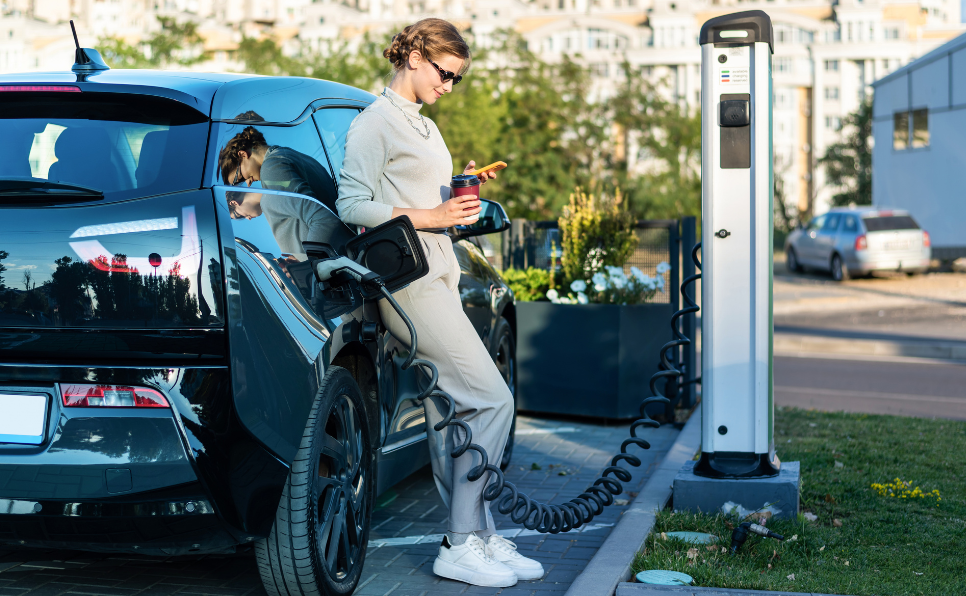
One major opportunity lies in reimagining our homes. Many households could transform their garages or parking spaces into personal charging hubs, making EV ownership much more convenient.
Infrastructure remains one of the biggest questions. A lot of people hesitate to buy an EV because they’re unsure where and how reliably they can charge it—especially on road trips.
The truth, though, is that charging infrastructure has already increased significantly in many parts of the world. The bigger gap is often awareness and mindset, not just hardware. Many people haven’t taken the time to learn, explore, or make a committed decision.
Evolution of the EV Ecosystem
EVs aren’t just new types of cars—they’re part of an entirely new mobility ecosystem. And companies like Tesla have been at the forefront of this shift.
Tesla didn’t just build electric cars; it built an integrated ecosystem. It turned vehicles into smart, connected devices with an operating system at the core. Only a decade ago, very few people imagined cars being run by software the way smartphones are—but that’s exactly where the industry is heading.
Just as the mobile industry evolved from basic phones to powerful, app-driven devices, the automotive world is transforming into one of always-connected, software-defined vehicles.
Here are a few powerful aspects of this EV revolution:
• Car Operating Systems: Modern EVs come with built-in operating systems that manage charging, discharging, and battery health. They help you plan routes around charging stations and estimate when and where you’ll need to plug in. Instead of stressing about range, you follow on-screen guidance and let the system handle the complexity.
• Autonomous and Assisted Driving: Self-driving technology has been in development for decades, but EVs have pushed it forward faster than ever. Many electric cars already offer advanced driver-assistance features, and some are close to fully autonomous in certain conditions. Talking to your car, setting your destination by voice, and letting it handle most of the driving is no longer science fiction.
• Smart Parking and Summon Features: Features like automated parking and “summon” mode, where your car can move itself in and out of tight spaces, are becoming more common. These capabilities don’t just feel futuristic—they genuinely make everyday life more convenient and less stressful.
All of this makes EVs feel less like traditional cars and more like intelligent, upgradable devices on wheels.


Embrace the Future
So, what exactly are we waiting for?
We don’t need to wait for the future to arrive—it’s already here. The only things many of us are missing are the leap of faith and the willingness to adapt.
Most of the major pieces are already in motion. Automakers around the world are shifting their lineups toward electric vehicles. Battery tech is improving. Charging speeds are getting faster. Software is getting smarter. Every year, we see more electric cars on the road.
The real holdup often isn’t technology—it’s us.
Will the entire world run on EVs by 2030? Probably not. That timeline is extremely ambitious, and there will still be plenty of ICE vehicles on the road.
But a major shift is already underway. A growing share of the global population is open to embracing EVs, and many have already made the switch.
Between 2016 and 2026, global electric car sales have surged by more than 2,000%. Charging networks are expanding across highways and cities. Insurance companies now build in EV-specific support and roadside assistance.
In other words, the foundation is set.
So now it’s on us—to think seriously about the future we want, the air we breathe, and the impact we leave behind. The move away from ICE and toward EVs won’t just change what we drive; it will reshape how we live, work, and move.
Are ICE vehicles obsolete by 2030? Maybe not entirely.
But are they on their way to becoming the minority, while EVs take the lead?
Absolutely—and that shift is already in motion. The next step is yours.