
Table of Contents
This post contains affiliate links. If you buy through them, we may earn a small commission at no extra cost to you.
Electric Vehicles Are Driving the Future: Why the Shift Is Happening Now
Electric Vehicles Are No Longer a Trend — They’re the Future
For more than a century, transportation has depended heavily on fossil fuels. Cars, trucks, buses, and even parts of global shipping have relied on gasoline and diesel to keep people and goods moving. But times are changing fast. Rising fuel prices, environmental concerns, technological breakthroughs, and shifting consumer habits are all pushing the world toward a new era of transportation. At the center of that shift are Electric Vehicles.
What once felt like an experimental niche is now becoming mainstream. From sleek sedans and practical SUVs to pickup trucks and delivery vans, Electric-Vehicles are showing up everywhere. Major automakers are investing billions into electrification, governments are introducing stronger clean-energy policies, and drivers are becoming more open to leaving internal combustion engines behind.
The conversation is no longer about whether electric cars will matter. The real question is how quickly they will take over the roads.


Why Electric Vehicles Matter More Than Ever
The biggest reason behind the rise of Electric Vehicles is simple: the fossil-fuel era is becoming harder to sustain. Traditional fuels are finite, expensive, politically sensitive, and deeply connected to global environmental issues. For decades, the world has watched oil prices swing dramatically while pollution and carbon emissions have continued to rise.
Transportation plays a major role in greenhouse gas emissions, highlighting the need for change. Here, sustainable mobility shifts from being just a buzzword to a practical solution.
Electric-Vehicles provide a sustainable alternative to fossil fuel-powered cars. They emit no tailpipe pollutants, reduce reliance on oil, and promote a future powered by renewable energy. As power grids incorporate more solar, wind, and other low-carbon energy sources, the environmental benefits of EVs become even more significant.
This change is more than just about safeguarding the environment. It is also about creating a transportation system that is smarter, more efficient, and more resilient for the long term.
The Rise of EV Technology
One of the biggest reasons people are now taking EV’s seriously is the rapid growth of EV technology. Early electric cars were often criticized for limited range, basic styling, and slow performance. Today, that image is outdated.
Modern EVs are faster, more refined, and more intelligent than many traditional vehicles. Instant torque gives electric cars quick acceleration, often outperforming gasoline-powered rivals in real-world driving. Battery technology has also improved dramatically, allowing longer ranges and better reliability.
At the same time, software is becoming a major selling point. Many Electric-Vehicles now feature smart navigation, app connectivity, over-the-air updates, driver-assistance tools, and systems that can automatically plan routes around charging stops. Some models can even estimate charging time, adjust travel routes in real time, help drivers locate the nearest available charger, and support autonomous driving.
This is where EV technology stands apart. Electric cars are not just replacing the engine with a battery. They are redefining what a vehicle can do.
Car Companies Are All In
A few years ago, the electric vehicle market was led by a handful of innovators. Tesla helped make EVs desirable and exciting, proving that electric driving could be fast, stylish, and aspirational. Since then, nearly every major automaker has joined the race.
Today, brands across the world are rolling out electric models in every category. Luxury manufacturers are launching premium EVs with impressive range and advanced interiors. Mainstream brands are bringing more affordable options to everyday buyers. Commercial fleets are also going electric, from city buses to cargo vans.
This widespread investment matters because it signals confidence. Carmakers are not experimenting anymore. They are preparing for a future in which EV become central to their business.
That means consumers now have more choices than ever before. Buyers can compare sizes, prices, body styles, battery ranges, and features instead of settling for one or two limited options. The EV market is growing more competitive, and this increased competition is fuelling faster innovation.
Understanding the Different Types of Electrified Vehicles
When people talk about Electric Vehicles, they often imagine fully battery-powered cars. But the electrified transportation space is broader than that.
• BEVs (Battery Electric Vehicles): These run entirely on electricity and do not use gasoline at all. They are charged from external power sources and are the purest form of EV.
• HEVs (Hybrid Electric Vehicles): These integrate a gasoline engine with an electric motor, enhancing fuel efficiency without requiring external charging.
• PHEVs (Plug-in Hybrid Electric Vehicles): These offer a battery that can be charged externally while also retaining a fuel engine for longer trips.
• FCEVs (Fuel Cell Electric Vehicles): These use hydrogen to generate electricity and are still developing in many markets.
Each option plays a role in the transition toward sustainable mobility, but fully battery-powered Electric Vehicles are currently leading the conversation because of their performance, lower operating emissions, and rapidly improving range.


What About Charging, Maintenance, and Daily Use?
For many people, the biggest hesitation around Electric Vehicles is not style or performance. It is practicality.
Potential buyers often worry about charging, battery life, maintenance, and whether an EV fits into everyday routines. These are valid concerns, but they are becoming easier to answer with each passing year.
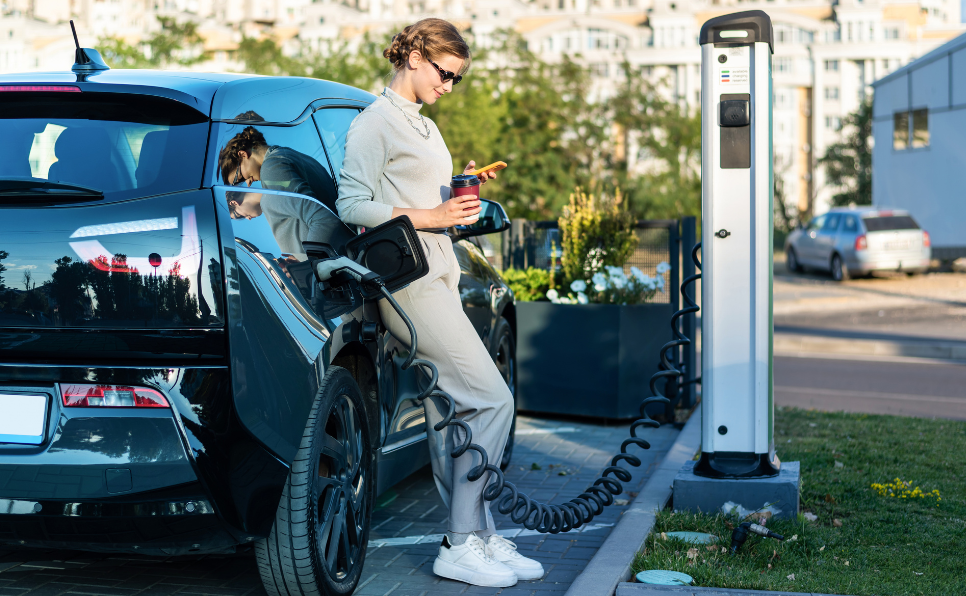
First, EV charging infrastructure is expanding quickly. Public charging stations are appearing in cities, shopping centers, office spaces, highways, and residential areas. Home charging is also making ownership more convenient, especially for drivers who can plug in overnight and start the next day with a full battery.
Second, maintenance is often simpler than with internal combustion engine vehicles. Since EVs have fewer moving parts, there is generally less wear and tear. There are no oil changes, fewer fluid-related issues, and reduced brake wear thanks to regenerative braking systems.
Third, range anxiety is becoming less of a barrier. Many modern Electric Vehicles now offer enough range for daily commuting, errands, and even long-distance travel. Smart route planning tools and improvements in EV charging infrastructure are making road trips more practical than ever.
In short, the day-to-day experience of driving an EV is becoming easier, smoother, and more predictable.
Why Electric Vehicles Feel Like the Smarter Choice
Once people drive an EV, many quickly understand the appeal. Electric driving feels different in the best way. The ride is smoother, acceleration is immediate, cabin noise is lower, and the overall driving experience feels modern.
But beyond comfort, Electric Vehicles make sense in a rapidly changing world. If fuel prices spike, EV owners are less exposed to those fluctuations. If cities tighten emissions standards, electric cars are already aligned with that direction. If consumers want more connected, software-based driving experiences, EVs are leading that evolution.
This is why Electric Vehicles are often described as future-ready. They are built for a transportation ecosystem that values efficiency, connectivity, and lower emissions.
The Bigger Picture: Sustainable Mobility Is Here
The move toward Electric Vehicles is not happening in isolation. It is part of a much larger push toward sustainable mobility. Cities are rethinking public transportation, energy systems are becoming cleaner, and consumers are paying more attention to the environmental impact of what they buy.
In that context, EVs represent more than a vehicle upgrade. They represent a mindset shift.
People are beginning to see transportation not only as a means of getting from one place to another but also as a choice that affects energy use, urban air quality, and long-term sustainability. Electric Vehicles fit naturally into this vision because they combine innovation with responsibility.
As battery production improves, renewable energy expands, and EV technology continues to advance, electric transportation will become even more accessible. The barriers that once slowed adoption are falling one by one.
Should You Buy an Electric Vehicle Now?
If you already own a car and are thinking about your next purchase, now is a good time to consider electric vehicles seriously. The market is stronger, the options are broader, and the ownership experience is improving rapidly.
The key is to match the right EV to your lifestyle. Think about your daily driving distance, whether you can charge at home, and what kind of trips you take most often. For many drivers, an EV is already a practical and cost-effective choice.
Learning how charging works and understanding the basics of EV ownership can make the transition much easier. Like any new technology, familiarity builds confidence. And once that learning curve is crossed, many drivers find they do not want to go back.


Final Thoughts
The future of transportation is being rewritten right now, and Electric Vehicles are at the center of that transformation. They are cleaner, smarter, more efficient, and increasingly more practical for everyday life. What started as an alternative is now becoming the standard.
From advances in EV technology to the expansion of EV charging infrastructure, the momentum is impossible to ignore. Add in the growing importance of sustainable mobility, and it becomes clear that electric driving is not just a passing phase.
It is the road ahead.
As fuel uncertainty, environmental pressure, and technological innovation continue to shape the auto industry, one thing is becoming obvious: Electric Vehicles are no longer simply part of the future — they are driving it.