
Table of Contents
This post contains affiliate links. If you buy through them, we may earn a small commission at no extra cost to you.
Google Samsung AI Glasses 2027 Could Redefine Wearable Technology
The technology industry is entering a new era of wearable innovation. Smartphones are no longer the only gateway to digital services, artificial intelligence, navigation, communication, and entertainment. The next major computing platform could sit directly on your face.
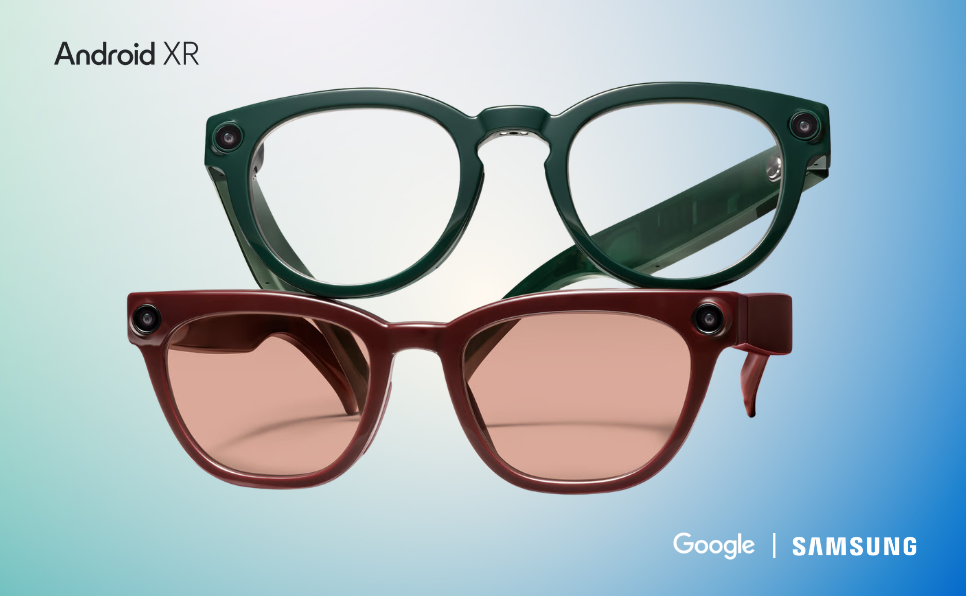
Google is once again working with Samsung to bring intelligent glasses to the market. This collaboration combines Google’s software ecosystem, Samsung’s hardware expertise, Qualcomm’s chip technology, and the design capabilities of eyewear brands such as Warby Parker and Gentle Monster.
The result could be one of the most important wearable launches of the decade.
Rather than treating smart glasses as another experimental accessory, Google appears to be building a complete ecosystem around them. Gemini will provide the AI intelligence, Android XR will power the extended-reality experience, and established fashion brands will help make the products practical enough for everyday use.
The Google Samsung AI glasses 2027 strategy is not simply about adding a camera or speaker to a pair of frames. It is about creating a hands-free computing platform that can understand what users see, respond to natural language, complete digital tasks, and connect with the wider Android ecosystem.
If Google and Samsung execute that vision successfully, smart glasses could finally move from niche technology to mainstream adoption.
A Powerful Partnership Built Around AI, Hardware, and Fashion
Google’s approach brings together several companies with highly specialized capabilities.
Google is responsible for the platform, AI services, software integration, and Android XR ecosystem. Samsung contributes extensive experience in consumer hardware, displays, mobile devices, and wearable engineering. Qualcomm supports the platform with chip technology designed for efficient, always-available computing.
Fashion will be equally important.
Google is reportedly working with Warby Parker and Gentle Monster to create frames that feel like genuine eyewear rather than oversized technology prototypes. The company is also expected to collaborate with Kering, opening the door to potential smart eyewear associated with premium brands such as Gucci.
This partnership model addresses one of the biggest challenges facing wearable technology: people must actually want to wear the product.
Successful smart glasses will need to offer:
- Comfortable frames suitable for extended daily use
- Designs that complement different personal styles
- Prescription and non-prescription lens options
- Reliable battery life and responsive performance
- Clear audio without creating a socially isolating experience
- Cameras and sensors that balance functionality with privacy
- Seamless connections to phones, apps, and cloud services
Technology alone will not make intelligent glasses successful. Google and Samsung must combine useful AI with hardware that feels natural, lightweight, stylish, and socially acceptable.
What to Expect From Google AI Glasses
Google has not officially confirmed every launch detail. However, the company’s broader wearable strategy points toward multiple products rather than one universal pair of glasses.
The first wave is expected to focus on audio-based experiences, voice interaction, cameras, and Gemini assistance. More advanced display glasses could follow later, potentially expanding the experience by placing visual information directly in the user’s field of view.
Warby Parker is expected to offer multiple intelligent frame designs. These could support non-prescription lenses, as well as Single-Vision and Progressive prescriptions, making the glasses relevant to users who already depend on corrective eyewear.
Gentle Monster is also expected to introduce its own selection of fashionable frames. Customers may be able to upload their prescriptions online or visit participating stores to complete the fitting process.
This combination of technology and established eyewear services could give Google AI glasses an important advantage. Instead of asking customers to adapt to a technology-first design, Google’s partners can integrate intelligent features into familiar frame styles and established prescription workflows.
Gemini Smart Glasses Could Deliver Hands-Free Intelligence
The most important feature will not be the camera, speaker, or frame. It will be Gemini.
Gemini smart glasses could give users immediate access to an AI assistant without unlocking a phone, opening an app, or typing a question. Users could speak, hear an answer through built-in speakers, and keep doing what they were doing.
That hands-free experience could support everyday activities such as:
- Asking questions about objects or locations in view
- Receiving turn-by-turn navigation guidance
- Translating signs, menus, and conversations
- Capturing photos and videos using voice commands
- Managing calls and text messages
- Creating reminders and calendar entries
- Ordering food or booking transportation
- Accessing information while walking, shopping, or traveling
- Interacting with compatible third-party applications
This is where Google’s ecosystem becomes strategically powerful. Gemini does not have to function as an isolated voice assistant. It can potentially connect with Android services, Google Maps, messaging, search, productivity tools, and supported third-party apps.
The glasses could therefore become an intelligent interface between the user and the digital world.
Google Audio Glasses: AI Without a Visible Display
The first product category is expected to be audio-focused smart glasses. These models could include microphones, speakers, cameras, and Gemini integration without placing a screen in front of the user’s eyes.
This simpler approach offers several benefits.
Audio glasses may be lighter, more discreet, and more affordable than display-equipped models. They can deliver useful AI features while still looking like traditional eyewear. They may also offer better battery efficiency because they do not need to power a continuous visual display.
A user could look at a landmark and ask Gemini for its history. A traveler could request a translation after seeing an unfamiliar sign. Someone preparing a meal could ask a question without touching a phone with wet or messy hands.
Google may also integrate its image-generation and editing technology, including Nano Banana capabilities, into the experience. In practice, users could capture an image and request changes with voice commands, such as removing a background or adding a creative element.
The real appeal is convenience. Instead of interrupting an activity to use a screen, users could remain present while AI works quietly in the background.
Google Display Glasses: Information Directly in Your View
Display-enabled Android XR glasses could take the platform much further.
These glasses may place digital information directly in front of the user through a built-in heads-up display. They could include audio-glasses capabilities while adding contextual visual guidance.
Potential applications include:
- Navigation directions displayed while walking
- Real-time captions and translations
- Notifications shown without checking a phone
- Step-by-step repair or assembly instructions
- Shopping information linked to visible products
- Visual reminders connected to places or objects
- AI-generated summaries of the user’s surroundings
- Productivity tools positioned within the field of view
The opportunity is enormous, but execution will matter.
Information must appear at the right time without overwhelming or distracting the wearer. Controls must feel intuitive, and the display must remain readable across different lighting conditions. Google will also need to deliver meaningful functions that justify wearing the device regularly.
If these challenges are solved, display glasses could become a significant evolution in personal computing.
Android XR Will Connect the Wider Ecosystem
The smart-glasses strategy is part of a much broader Android XR ecosystem.
Google is also collaborating with XREAL on Project Aura, a wired XR-glasses concept designed to expand the user’s digital workspace. The platform could support floating screens, interactive instructions, entertainment, creative tools, and productivity experiences.
Imagine following a floating recipe while cooking without repeatedly looking away from the ingredients. A DIY enthusiast could keep measurements, level indicators, and assembly guidance visible while working. A content creator could use a wider virtual canvas without carrying multiple physical monitors.
Android XR could support:
- Immersive entertainment
- Virtual workspaces
- Interactive education
- Content creation
- Guided repairs and DIY projects
- Gaming and spatial applications
- Multi-screen productivity
- Contextual AI assistance
Developers will be critical to this vision. Google needs a strong library of applications that take advantage of cameras, spatial awareness, voice commands, AI, and immersive displays.
A successful developer ecosystem could turn Android XR glasses from an interesting device into a versatile platform.
Galaxy XR Strengthens the Google and Samsung Vision
Samsung and Google have already been developing extended-reality experiences through Galaxy XR. These devices provide a foundation that could eventually connect headsets, intelligent glasses, Android services, and third-party applications.
Samsung brings extensive experience in displays, mobile hardware, manufacturing, and consumer electronics. Google contributes the operating platform, Gemini intelligence, developer tools, and a global services ecosystem.
Together, they can build experiences that move across devices.
A user might begin an activity on a smartphone, continue it through smart glasses, and later expand it within a Galaxy XR environment. This continuity could become one of the ecosystem’s strongest competitive advantages.
Rather than creating separate devices with disconnected features, Google and Samsung appear to be building an interconnected AI platform.
Can Google and Samsung Challenge Meta?
Meta has already built strong momentum in the smart-glasses category by combining cameras, audio, AI, and recognizable eyewear designs.
Google and Samsung, however, have several strategic advantages:
- A massive global Android user base
- Deep integration with Google services
- Gemini’s expanding multimodal capabilities
- Samsung’s hardware and display expertise
- Qualcomm’s specialized chip technology
- Partnerships with established fashion and eyewear brands
- A developer ecosystem that can scale across device categories
Usefulness rather than specifications will ultimately decide the competition.
Consumers will choose the glasses that fit naturally into their daily routines, provide dependable assistance, protect privacy, and deliver clear value beyond what a smartphone already offers.
Final Thoughts
The Google Samsung AI glasses 2027 roadmap represents more than another wearable product launch. It signals a potential shift toward ambient computing, where digital assistance becomes available without constantly looking down at a phone.
Audio-first glasses could introduce users to convenient, hands-free Gemini features. Display glasses could add visual information and real-time guidance. Android XR and Galaxy XR could extend the experience into productivity, entertainment, education, and immersive computing.
The strongest part of Google and Samsung’s strategy is the ecosystem surrounding the hardware. Gemini, Android, developers, fashion brands, prescription support, and XR technology can work together to create a practical, innovative platform.
Smart glasses will not replace smartphones overnight. However, they could gradually change how people access information, communicate, navigate, create, and complete everyday tasks.
If Google and Samsung can successfully balance intelligence, design, comfort, privacy, and usability, their upcoming glasses may become one of the defining technology products of 2027.